
A sensor that flags a bad container, and a ram that fires on the next good one, puts the wrong pack in the reject bin and leaves the fault on the line. The check is the path from the fault signal to the container that actually leaves the belt.
This page is based on a public document, not a test by this site. The station described below is Accutek Packaging’s note “Inspection-Rejection Station”, dated 25 August 2018. The research-library copy was fetched on 6 October 2026 and read on 15 October 2026. It is that maker’s description of its own station. It is not a specification for your line.
The blank checklist is a file you can print: reject-actuator-checklist.txt. The packaging lines section also holds the air and servo comparison.
What that station says it checks
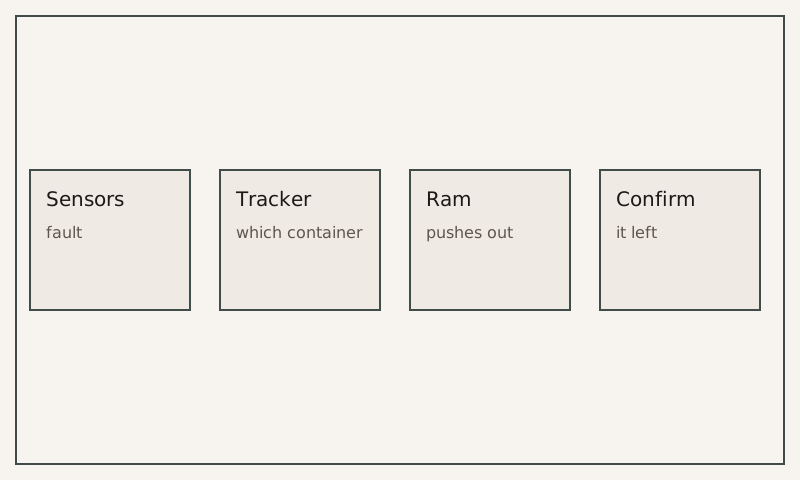
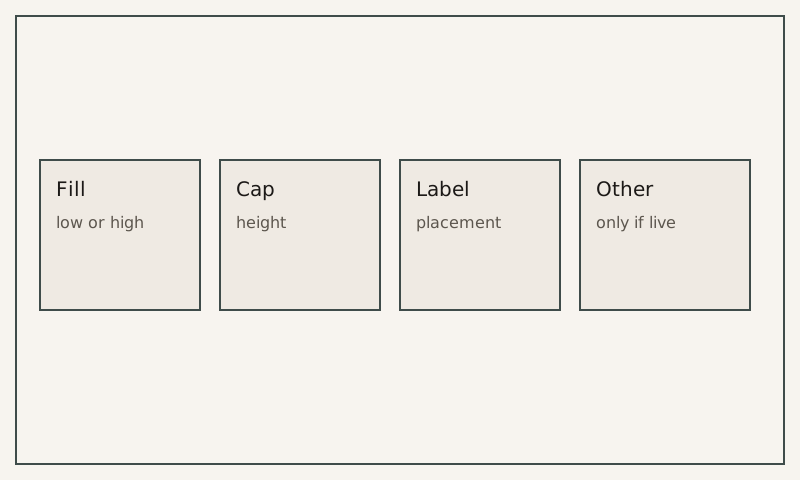
The note says bottling lines then processed as many as 200 containers a minute. Four issues on each container make 800 inspections a minute in that account. The station checks low fill, high fill, high cap and label placement. Three optical sensors check fill and cap. A camera with an optical comparator checks the label against a good container shown at setup. A fault from any of the four sensors rejects the container. A pneumatic ram downstream of the housing pushes the rejected container out. The inspector can track up to three containers in the inspection zone at once.
Count the containers between sensor and ram
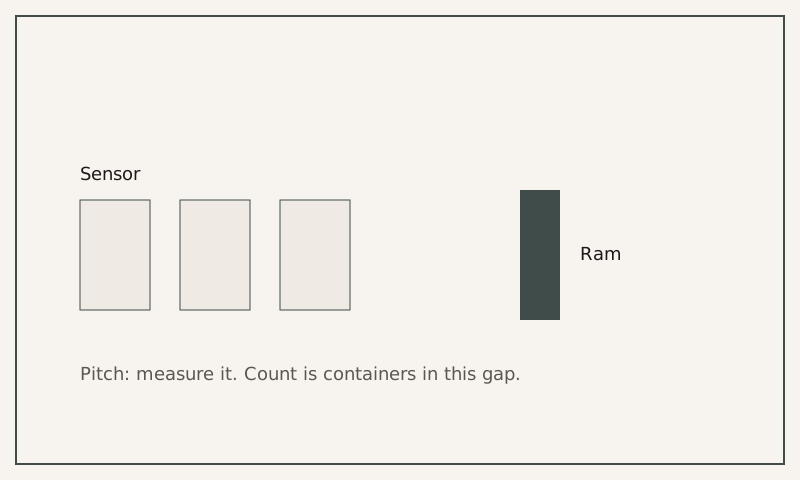
Measure the distance from the last sensor to the ram and divide by the container pitch. Write that count. If the belt is running at the 200 containers a minute in that note, a one-container error rejects the neighbour every time. The “up to three” figure is the capacity that note claims for its tracker. It is not a number to copy onto a different pitch.
Also write what the tracker does when the belt stops and starts. A count that resets on a stop will fire the ram on the wrong container after the restart.
Name the live faults
| Question | Answer from this line |
|---|---|
| Which faults reject, and which faults only alarm? | — |
| How many containers sit between the sensor and the ram? | — |
| What is the container pitch you measured? | — |
| Does the tracker keep that count through a stop and a start? | — |
| What happens to the next good container if the ram stays out? | — |
| Who confirms the rejected container left the belt, and where is that written? | — |
The same rows are in reject-actuator-checklist.txt.
The ram is a cylinder. Its air supply, port pressure and mount are the questions on the cylinder note. A valve that exhausts on purpose has to be marked so a leak walk does not tag it as a failure. That walk is the survey plan.