
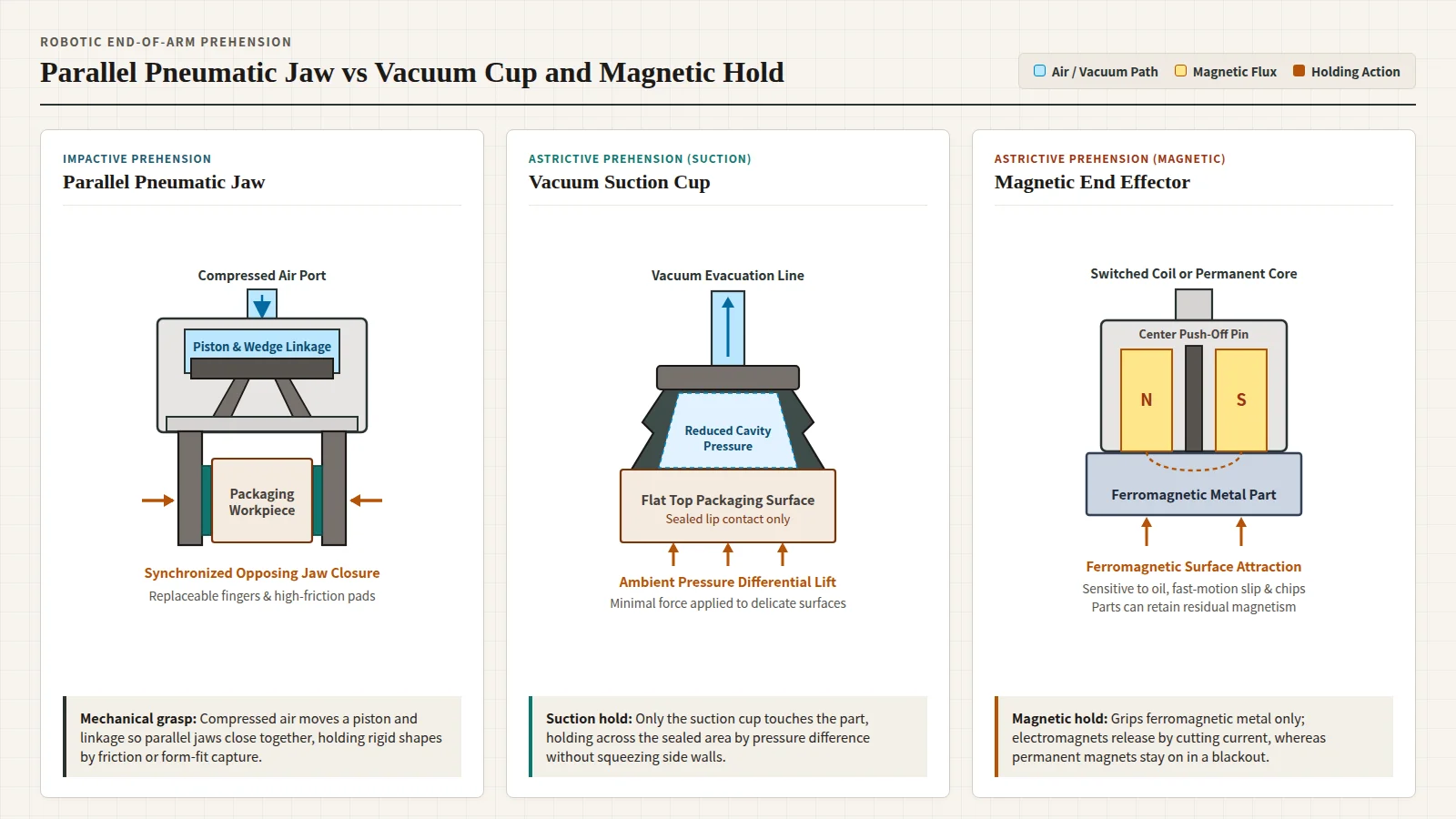
Robotic Gripper Types: Jaw vs Vacuum EOAT Selection
A jaw, a vacuum cup, and a magnet hold packaging parts in different ways. Check the surface, the force, and the robot flange before you choose.
Section
A task-by-task comparison of an air cylinder and a servo, and a checklist from the fault signal to the reject ram.
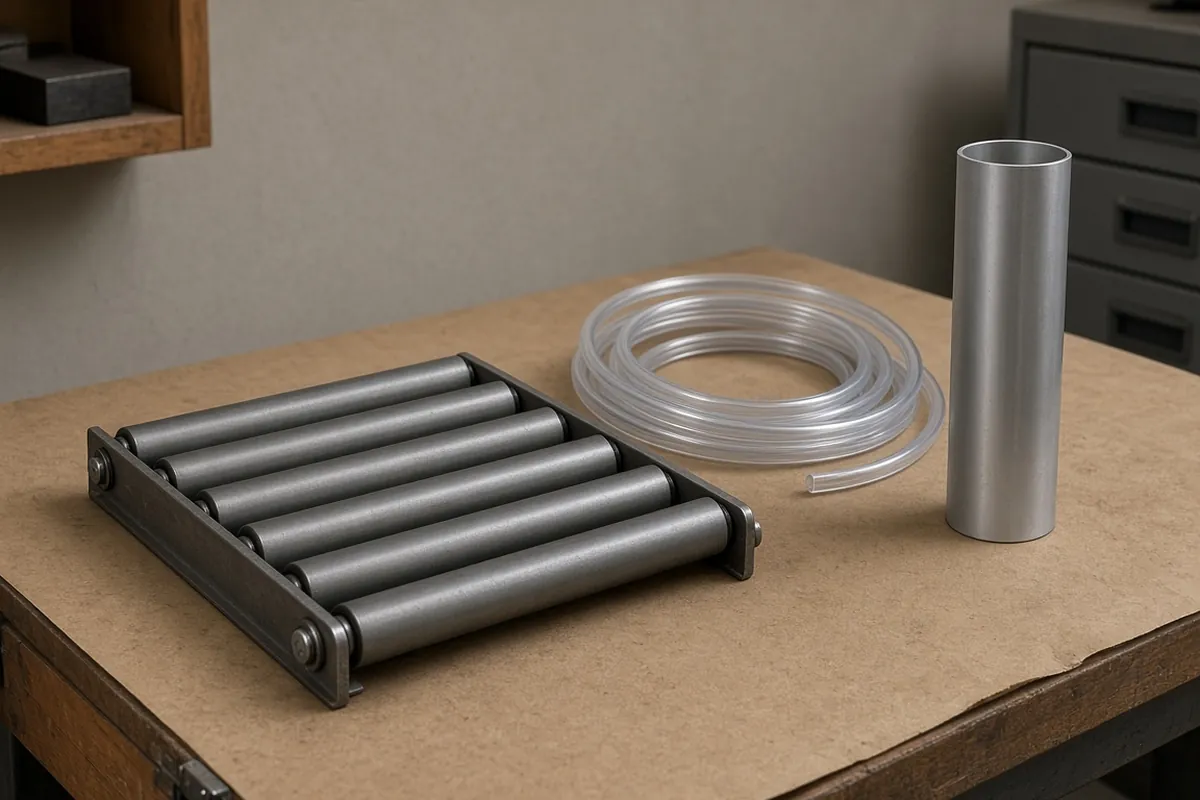
Decide whether the motion stops at a hard end or must hold a position in the middle. Then check that a reject ram hits the container the sensor saw.
Pneumatic and servo motion puts one published cylinder guide next to one published gripper job so you can compare the task. Pneumatic vs. electric actuator TCO: energy efficiency, servo changeover, and rodless cylinders calculates 8%–18% vs. 65%–82% wall-to-shaft energy efficiency, 5-year TCO payback crossover equations, multi-SKU servo changeover OEE savings, and rodless pneumatic vs. toothed-belt and ball-screw axes. Reject actuator checklist asks whether the ram pushes the container that failed, using one published inspection station as the example.
A jaw, a vacuum cup, and a magnet hold packaging parts in different ways. Check the surface, the force, and the robot flange before you choose.
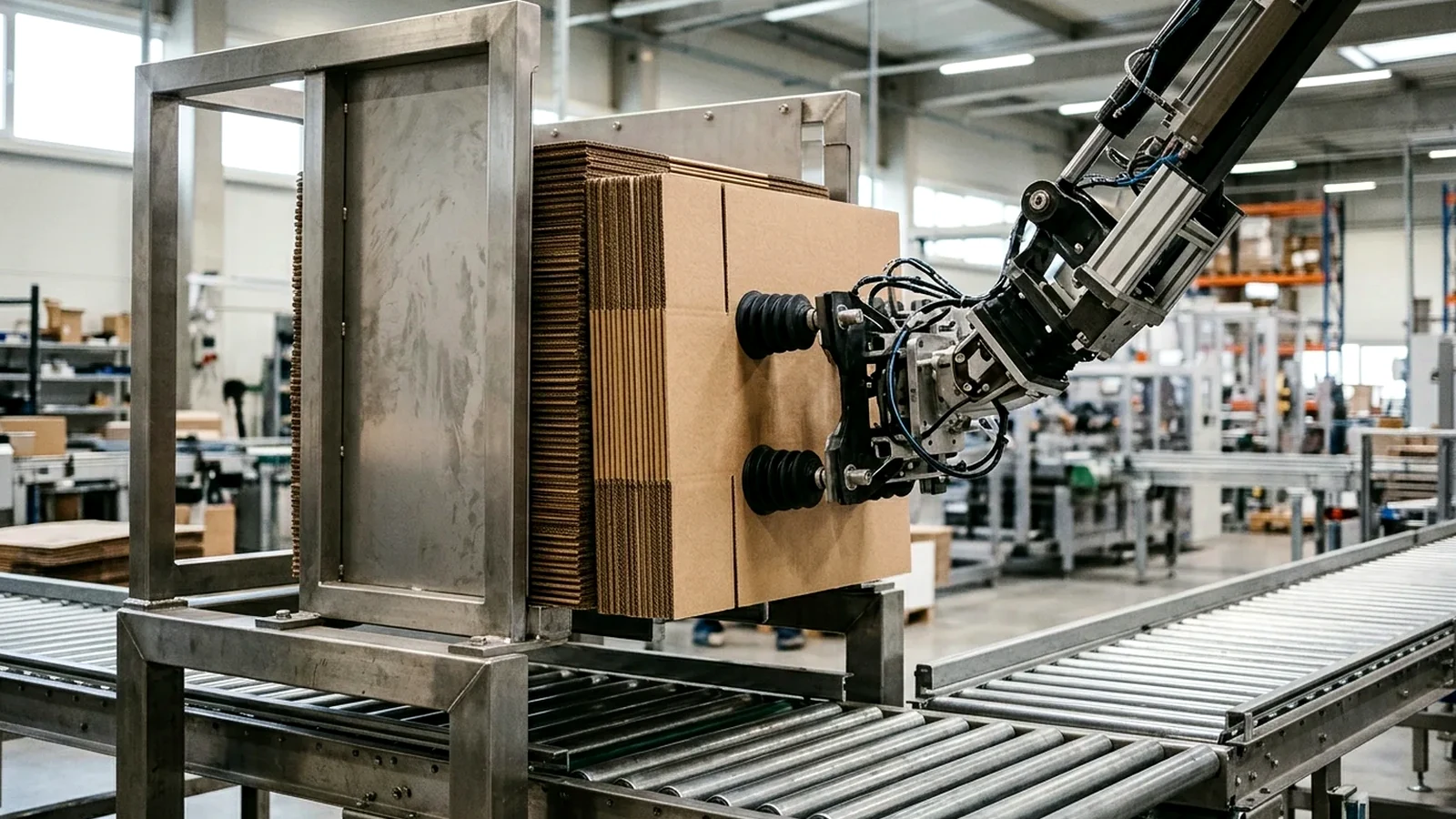
Compare single-stage and multi-stage Venturi ejectors against rotary vane and dry claw vacuum pumps across air consumption, hold time, and carton leakage.
Pneumatic vs electric actuator TCO: 8%–18% vs. 65%–82% energy efficiency, 5-year payback equations, servo vs pneumatic changeover OEE, and rodless pneumatic cylinder mechanics.
Compare pneumatic air cylinders and electric servo actuators for packaging motions across end-stop vs. mid-stroke positioning, load holding, and stiffness.
Questions that tie a fault signal to the container the ram pushes off, using one published inspection station as the example.