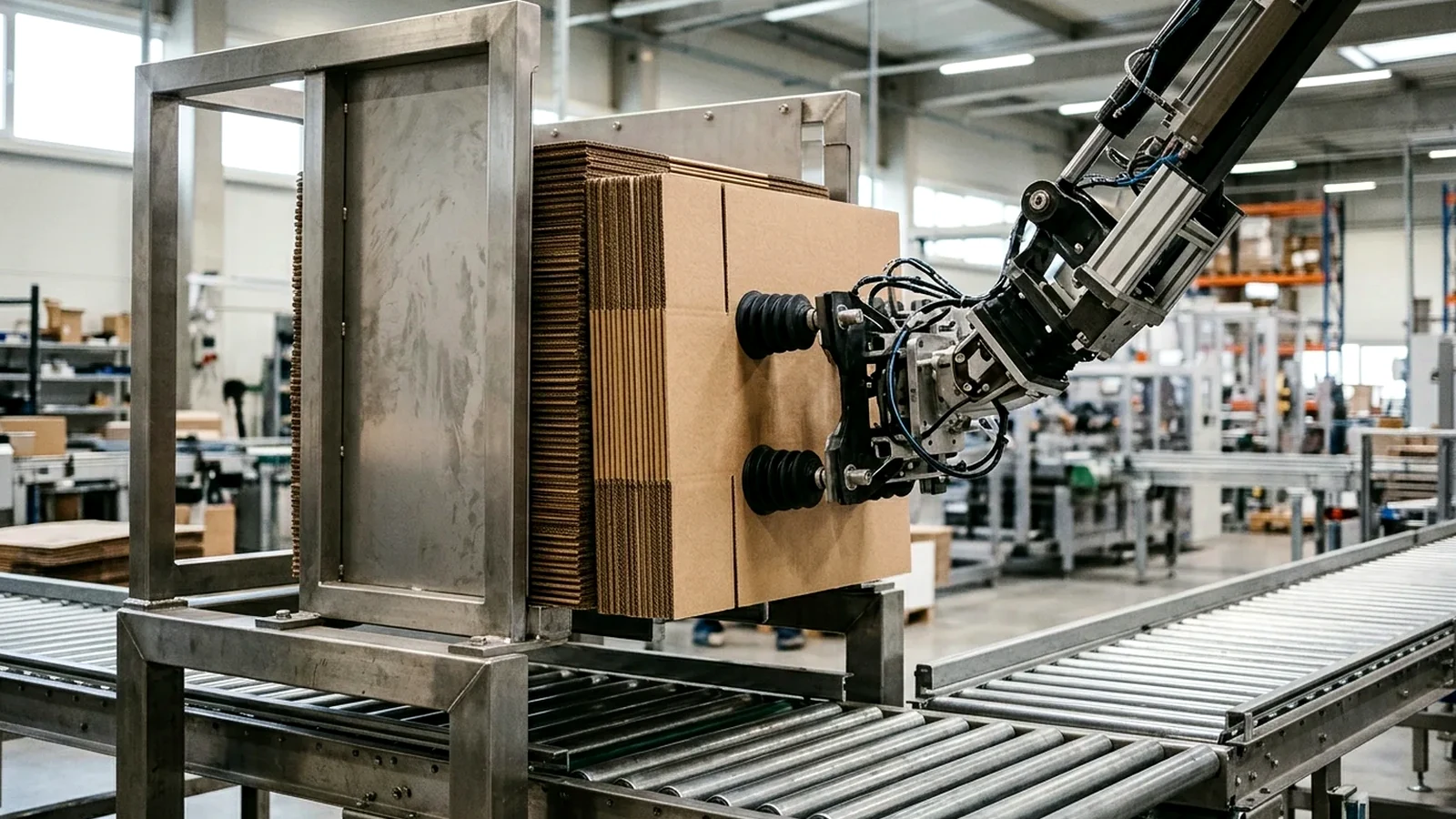
Switching from compressed air-driven vacuum generators to electric-driven vacuum pumps improves efficiency by two to fifty times, with a rule-of-thumb average that electric vacuum pumps are four times more energy efficient. A 2012 field test on a carton erecting machine at a chocolate manufacturer showed that the vacuum system was oversized by up to 43% in energy consumption to handle outliers of leakage variations across porous corrugated cardboard.
Selecting between point-of-use Venturi ejectors and centralized mechanical pumps across packaging line applications requires matching suction flow, evacuation response, and hold duration against board porosity, alongside the broader actuation trade-offs covered in pneumatic versus servo motion and pneumatic versus electric actuator changeover economics.
Architecture Comparison: Venturi Ejectors vs Electromechanical Vacuum Pumps
Pneumatic ejectors and electromechanical vacuum pumps differ fundamentally in how they convert electrical utility input into suction flow and how they respond to sealed versus leaking workpieces.
| Generator Architecture | Air Consumption and Efficiency Ratio | Flow Profile and Operating Characteristics |
|---|---|---|
| Single-Stage Venturi Ejector | A single-stage Venturi vacuum generator typically has a ratio of compressed air consumption (scfm) to vacuum flow of no better than 1:1 and sometimes as high as 2:1 or 3:1. | Single-stage Venturi vacuum pumps have a straight-through design that allows dirt, dust, and debris to pass through without clogging and are ideal for applications requiring 16 inches of mercury or more where high flow rate is not a concern. |
| Multi-Stage Venturi Ejector | Multi-stage vacuum generators expand compressed air in controlled stages, usually improving the ratio of compressed air consumption to vacuum flow to about 1:3 or better. | At zero inches of mercury, a multi-stage Venturi pump has a much faster flow rate than a single-stage pump, but above 12 inches of mercury a single-stage pump typically has a greater flow rate. |
| Rotary Vane Mechanical Pump | At a typical pick-and-place vacuum level of approximately -600 mbar (approx. -18 inHg), a single Becker VT4.16 60 Hz rotary vane pump can replace a combination of 3 ejectors. | The ejector combination requires 5.69 Nl/s of compressed air at 6 bar (2.28 kW electrical power), whereas a Becker VT4.16 at 60 Hz delivering the same volume flow draws 0.75 kW—about three times as efficient in continuous operation. |
| Dry Claw and Dry Screw Pumps | A Busch MINK MV 0360 A ECOTORQUE dry claw vacuum pump equipped with an IE5 permanent magnet synchronous motor and variable speed drive improves motor efficiency over conventional IE3 asynchronous motors and reaches an ultimate pressure of 100 hPa (mbar). | An Atlas Copco DHS 3000 VSD+ dry screw vacuum pump with an IE4 motor, asymmetrical rotor design, and integrated VSD frequency converter supports central food-industry pick-and-place and paper processing with no oil emissions. |
| Compact Electric Gripper Pumps | Vacuum ejectors with an adaptive air-saving function achieve compressed-air savings of up to 95 percent where usable, while the Schmalz ECBPMi delivers up to 1.6 l/min at 60% max. vacuum and the Schmalz GCPi delivers 46 l/min at 80% max. vacuum at 24 V-DC. | A Schmalz GSP (GSPc/GSPi) 24 V DC smart electric vacuum pump (50 to 150 liters per minute suction rate, 80% max. vacuum, 165 W max. power) paired with a Schmalz LQE compact valve (8 mm nominal size, 240 l/min nominal flow) saves up to 90 percent in energy compared to conventional electric vacuum generators and reduces part-release energy consumption by up to 99 percent compared to compressed-air blow-off. |
Selection Takeaway: On a mechanical vacuum pump system, a vacuum valve between the pump and working circuit closes when the target vacuum is reached and shifts open to atmosphere so the continuously running pump does not overheat by pumping against a closed valve; on an air-driven Venturi system, the valve shuts off the compressed air supply and a check valve holds vacuum.
Compressed Air Energy Cascade, Heat Load, and Plant Payback
Compressed air is energy expensive because 8 hp of electricity produces only 1 hp of work with compressed air. Depending on Venturi size and type, the energy needed to run the supporting air compressor is between eight and 17 times the required horsepower of a standalone mechanical vacuum pump.
A Becker Model KVT 3.100 using a 5 HP motor replaces a comparable continuous-duty Venturi generator that uses between 40 and 50 HP worth of compressed air (eight times more electrical cost). Replacing compressed air vacuum generators with electric vacuum pumps in a facility with many units can allow a 100 horsepower air compressor to be taken off-line and replaced with a 25 horsepower dedicated vacuum pump.
Because its supporting compressor motor is 8 to 10 times larger, a Venturi system’s compressor generates about 8-10 times more heat than a mechanical vacuum pump, at 2,546 BTU/HP. During the exhaust process, Venturi ejector systems can be up to 16 times louder than electromechanical vacuum pumps.
In an automotive plant audit, 2 central vacuum generators operating at 87 psig with 3 cups per generator consumed 112 scfm at 40 cycles per minute. At 112 scfm compressed air consumption and 40 cycles per minute, the centralized Venturi system cost about $11,200 per year at $0.06/kWh over 8,000 hours per year.
Converting the six cups to decentralized end-of-tool Venturi generators mounted on each cup with auto shut-off lowered air consumption to 10.79 scfm at 40 cycles per minute ($1,079/year), saving $10,121/year. In a snack food plant packaging area, all Venturi generators in the plant were replaced with six Busch MWK 1142 variable-speed pumps in the Box Room (box erectors had been OEM-supplied with uncontrolled Venturi).
In a snack food plant operating 8,760 hours per year at $0.08/kWh, recoverable savings from compressed air flow reduction are $162.51 per cfm per year. For Becker VT-line dry rotary vane vacuum pumps in pick-and-place automation, routine maintenance takes 10-15 minutes, and in some cases applying variable frequency drives (VFDs) yields 70-80% energy savings compared to a standard pump.
Porous Corrugated Board Leakage and Suction Cup Sizing
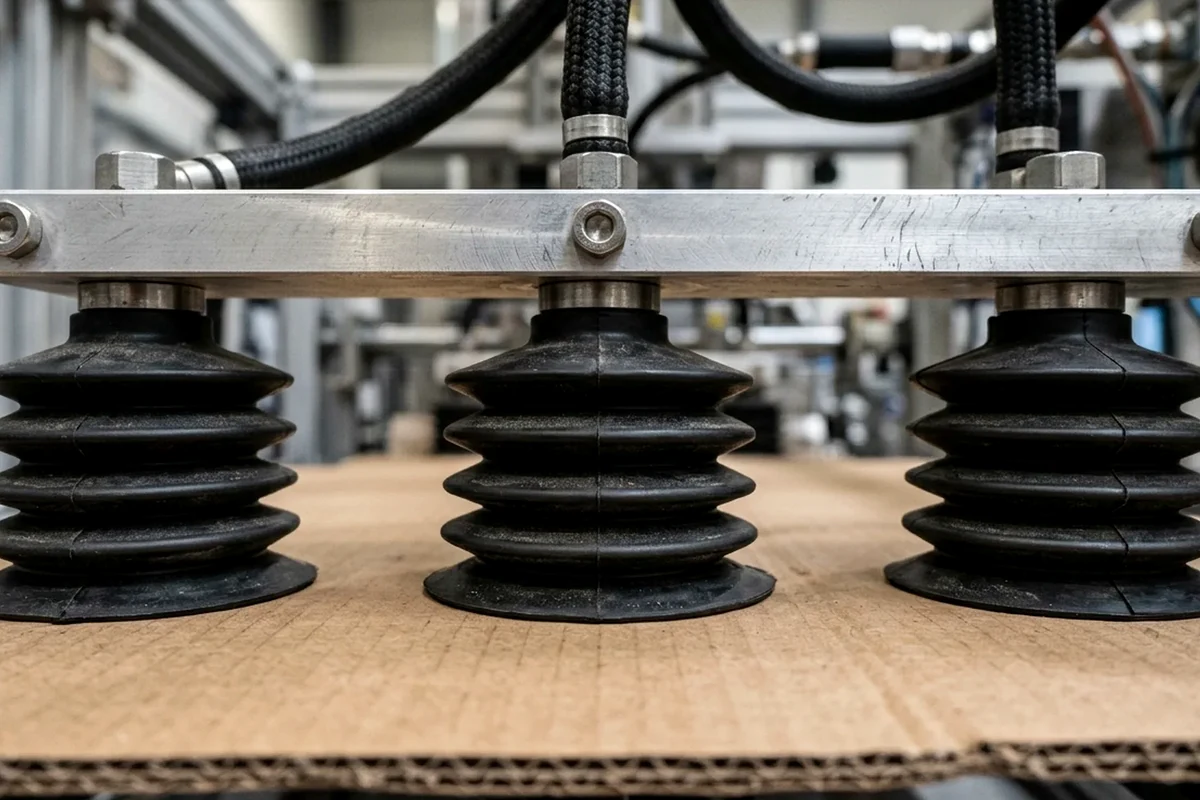
Suction cup lifting force F in Newtons is F (N) = A × P, where A is circular suction cup area (π × Diam²)/4 in m² and P is vacuum pressure in Pa (N/m²). The majority of evacuation time in a Venturi vacuum system is from 12 inches of Hg and deeper vacuum, so using a lower vacuum level with larger suction cups reduces evacuation time.
A 40 mm diameter vacuum cup with 27 inches of Hg vacuum level lifts a nominal 5.5 lbs, whereas a 75 mm diameter vacuum cup at 18 inches of Hg vacuum level lifts a nominal 22 lbs.
Increasing the operating vacuum level of a Venturi vacuum system from 18 inches Hg to 27 inches Hg is up to 10 times less energy efficient.
On a 40 mm diameter suction cup, reducing vacuum pressure from 65 -kPa (19.2 -inHg) to 55 -kPa (16.2 -inHg) reduces lifting force by approximately 15%, whereas upsizing from a 40 mm to a 50 mm cup at 55 -kPa (16.2 -inHg) increases lifting force by more than 35%. Maintaining an optimized constant low vacuum pressure on a corrugated cardboard case packer eliminates the risk of surface marks/damage and reduces energy consumption by up to 30-50% (more than 1,000 kWh per year per case packer).
A dual-durometer suction cup—usually with a 30-durometer lip and a 50-durometer body—improves sealing compliance on grainy or rough-textured surfaces while retaining stability, and any suction cup lifting design should incorporate a safety factor greater than two. On end-of-arm layer grippers with 500 to 1,000 suction cups handling porous corrugated cardboard, air flow through the corrugated board can prematurely close ball check valves even on sealed cups, so metered orifice flow restrictors sized in fractions of a millimeter are used at each cup.
Single-Stage vs Multi-Stage Venturi Ejector Physics and Air-Saving Limits
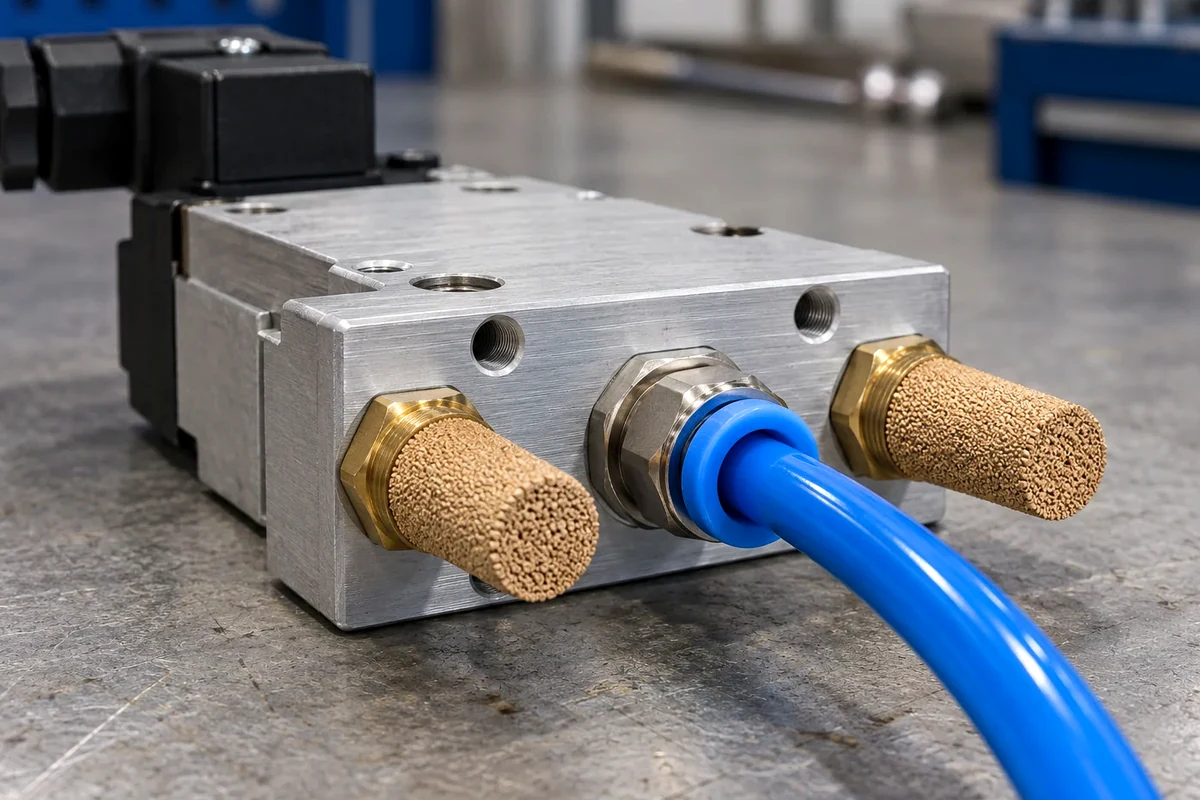
Under ISO 50001 energy management initiatives, a poor ejector nozzle or inefficient part-release function can consume four times more compressed air than best-in-class models. An automatic air-saving vacuum-switch (vacustat) function on sealed materials turns off compressed air when target vacuum is reached and restores supply when vacuum loss occurs.
A Piab piSAVE optimize vacuum-controlled air pressure regulator for air-driven ejectors operates over a set vacuum range from 25 -kPa (7.4 -inHg) to 70 -kPa (20.7 -inHg). A Piab piSAVE optimize vacuum-controlled air pressure regulator works with single-stage or multistage air-driven ejectors having an air consumption from approximately 100 Nl/min (3.5 scfm) to 900 Nl/min (31.8 scfm) at recommended feed pressure.
Schmalz SCPL (SCPLb/SCPLc/SCPLi) multi-stage compact ejectors designed for porous cardboard and packaging materials deliver a suction rate from 290 l/min to 1,440 l/min, a maximum vacuum of 60% or 90%, and an IP54 protection rating. Piab piCOMPACT 10X stackable manifold-mounted multi-stage ejectors can group between 3 and 8 ejectors with a common compressed-air supply port and common exhaust port.
SMC point-of-use pneumatic vacuum generators with updated nozzle designs reduce compressed air consumption by 30-40% over previous generations while their solenoid valves draw 0.1 watt of electrical power, and Festo VTUX valve terminals with integrated PCB vacuum sensors save more than 30% of compressed air. VacMotion DSV single-stage Venturi vacuum generators with an integrated blow-off port span 0.5 to 80 scfm of compressed air consumption—including a model using 1.8 scfm of compressed air to generate 2.55 scfm of vacuum—and can cycle 25 times per second between vacuum and blow-off.
Anver VR series mini-vacuum Venturi pumps mounted directly at the suction cup achieve a 26 in.-Hg vacuum with 0.74 to 1.27 scfm compressed air flow at 72 psi supply pressure, providing millisecond attach and release. In a robotic food-packaging pick-and-place application using Schmalz GCPi 24 V-DC compact electric vacuum pumps (46 l/min suction rate, 80% max. vacuum) mounted on the gripper, two cobots pick and place foil-wrapped meat packages at up to 96 picks per minute.
Vacuum Line Sizing, Filtration, and Pump Protection
Mounting decentralized pneumatic valves at or on the actuator reduces tubing connections by 50 percent and achieves an energy saving of 35 percent, with washdown-capable valves rated to IP69K eliminating remote enclosures and over 50% of tubing. When a majority of airborne particulates are smaller than one to five microns in diameter, filtration systems for an electric vacuum pump become relatively large, favoring venturi-style vacuum pumps.
Under ISO 8573-1:2010 and BCAS Food and Beverage Grade Compressed Air Best Practice Guideline 102, compressed air in direct contact with food products should meet or exceed ISO 8573-1:2010 [2:2:1] and [2:4:2] for indirect contact, tested at least twice per year. Sizing pneumatic supply branches and vacuum runner hoses follows the internal bore velocity and pressure loss principles detailed in tubing inside diameter pressure drop limits, while upstream filtration and moisture removal follow air preparation for packaging lines.
Packaging Station Specification Record Checklist
Before freezing the bill of materials for a carton erector, case packer, or palletizing cell, record the following station parameters on the engineering commissioning sheet:
- Workpiece Surface and Porosity Class: Record whether the gripped surface is non-porous film or foil, coated cartonboard, or recycled corrugated linerboard.
- Suction Cup Geometry and Compound: Specify cup diameter, bellows convolution count, and lip durometer matched to board flute texture.
- Operating Vacuum Level and Cup Area: Size cup area so the station operates in a moderate vacuum band rather than deep vacuum.
- Duty Cycle and Hold Window: Log pick rate, vacuum attach duration, transport dwell time, and blow-off release pulse duration.
- Generator Topology and Control Mode: Select decentralized ejectors with air-saving shut-off for sealed short holds, vacuum-regulated multi-stage ejectors for intermittent porous picks, or variable-speed dry rotary vane, claw, or screw pumps for multi-station continuous duty.
- Tubing Conductance and Open-Cup Restriction Check: Verify vacuum runner inside diameter and confirm open-cup restriction with a vacuum gauge at the manifold.
Sources
- Compressed Air Best Practices — Nitrogen, Vacuum, and Compressed Air at a Snack Food Plant
- Compressed Air Best Practices — Missed Demand-Side Opportunities: Utilizing Air-Driven Venturi Vacuum Generators Efficiently
- Compressed Air Best Practices — The Ins and Outs of Vacuum Generators
- Compressed Air Best Practices — Handling Corrugated Cardboard with Optimized Pressure Regulation of Air-Driven Vacuum Pumps
- Compressed Air Best Practices — Pneumatics and Vacuum Generators Power Robotics in Automation
- Compressed Air Best Practices — Pneumatic and Vacuum Energy Optimization in OEM Machines
- Compressed Air Best Practices — Food and Beverage Compressed Air Purity Testing Guide
- Bimba Technical Note — Single-Stage Versus Multi-Stage Vacuum Pumps for Pick-and-Place Applications
- Becker International Technical Note — Venturi Vacuum Generators Versus Mechanical Vacuum Pumps
- Power and Motion Technical Note — Suction Cups Hold On Tight for Corrugated Cardboard Layer Gripping
- Power and Motion Technical Note — Designing with Vacuum and Suction Cups
- Power and Motion Technical Note — Point-of-Use Venturi Vacuum Pumps
- Pneumatic Tips Engineering Note — Selecting an Air-Driven Vacuum Ejector
- Pneumatic Tips Engineering Note — Reducing Vacuum System Energy and Carbon Footprint
- Pneumatic Tips Engineering Note — Integrated Controls and Condition Monitoring for Vacuum Ejectors
- Pneumatic Tips Engineering Note — Compact Multi-Stage Vacuum Ejector Manifolds
- Schmalz Technical Note — Multi-Stage Compact Ejectors and Electrical Vacuum Generators for Packaging Automation
- Automate UK Technical Note — Permanent Magnet Synchronous Claw Vacuum Pumps with Variable Speed Drives
- Fluid Power World Technical Note — Dry Screw Vacuum Pumps with Variable Speed Drives for Food and Paper Processing